01
Build a model step by step
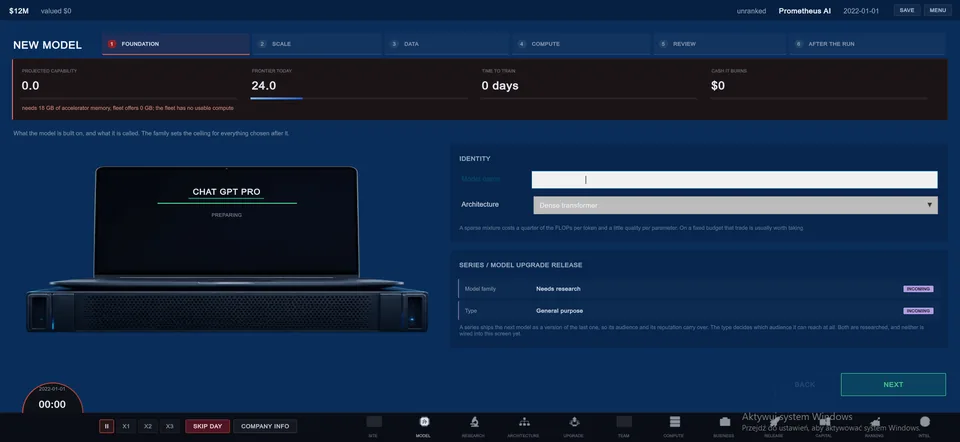


Pick the model size, the data and the compute, and the game shows straight away how good it will be, how long training takes and what it costs. Quality comes from a real scaling law from AI research.
January 2022. Twelve million dollars. No product. Train models, fund research and pay for compute, while your rivals keep moving whether you are ready or not. The expensive decision is rarely just what to buy. It is when.
Eight things you do from the first day. All of them are in the free 0.5.0 build.
Pick the model size, the data and the compute, and the game shows straight away how good it will be, how long training takes and what it costs. Quality comes from a real scaling law from AI research.

Money speeds research up, but you cannot buy the calendar. New architectures, better data and even bigger offices unlock one after another.

Eight cards are not always better than seven. A fan instead of a card can give you more power. You buy the cards yourself and fit them into the cabinets in the basement.
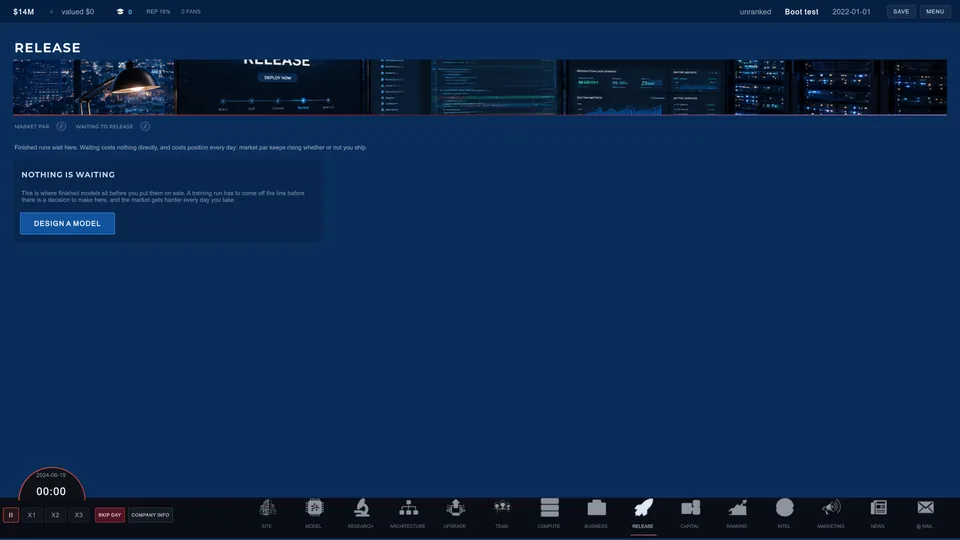
A quarter of your users move to an update on day one. Careful, though: if it is worse than the last one, the rest never come.
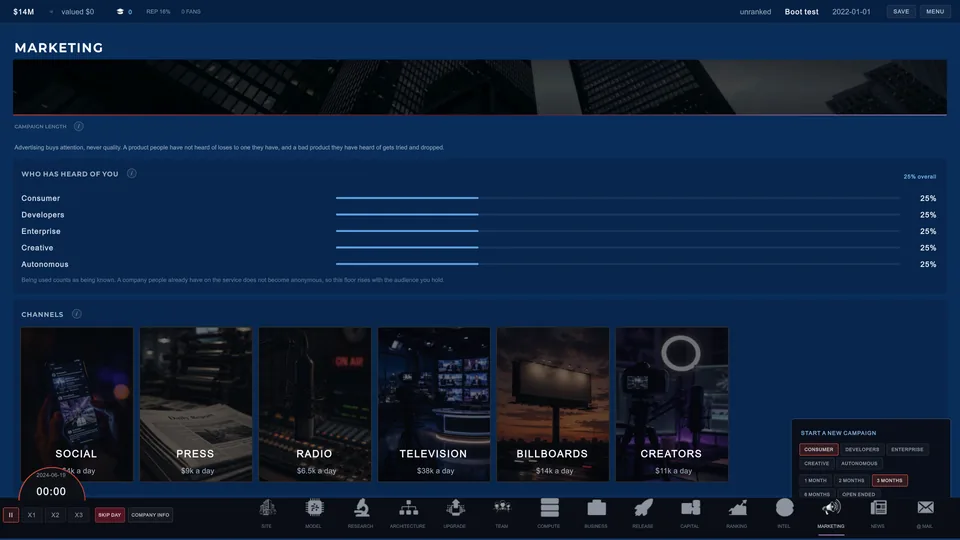
A good model is not enough. You set the price, decide how much to give away for free and pick the advertising: social media, press, creators or television.
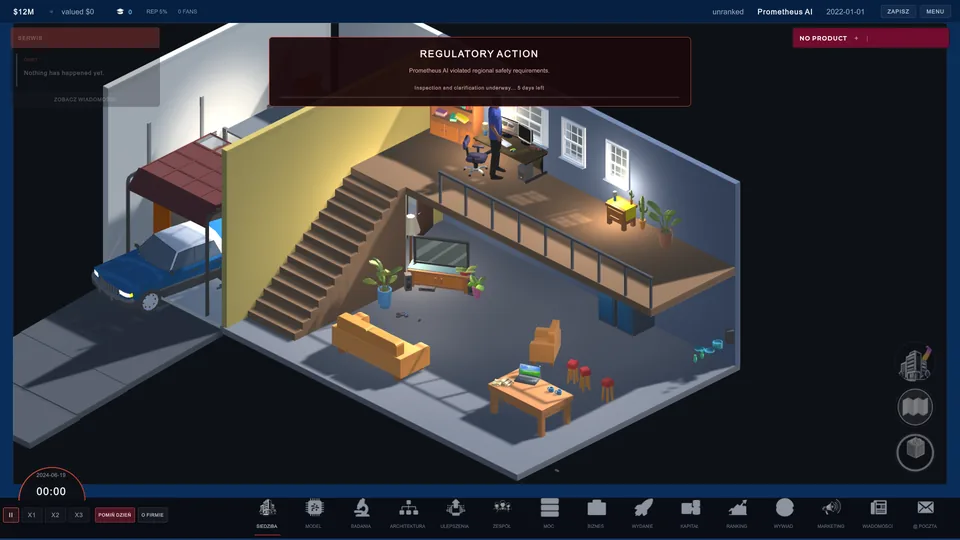
Twenty-three real news events reach you and your rivals on the days they actually happened. After a serious incident, the regulator gives you five days before deciding on a penalty.
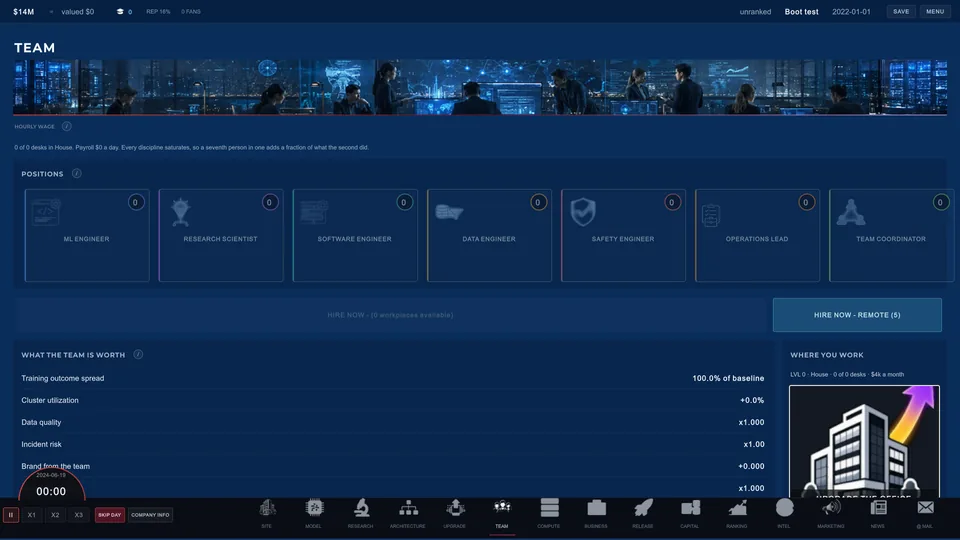
Emil walks you through your first hour and pays for your first research. He runs a small lab of his own, too. Then you hire a team, and every person has their own expectations and working hours.
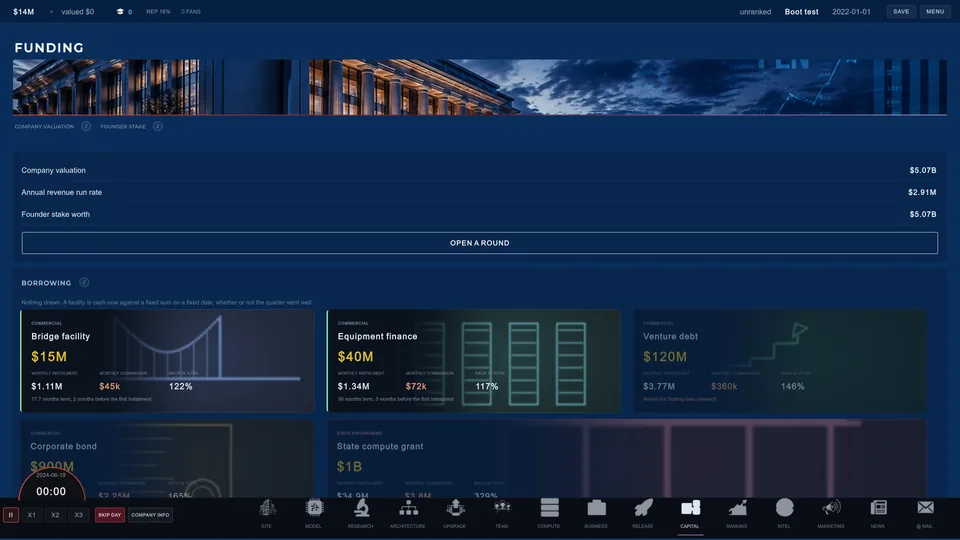
Investors, loans and grants. Each has a price: a share of your company, a monthly fee, or conditions you have to keep.
A government can lend you up to 10 billion dollars, but you pay back almost three times as much, and while you owe it, nobody can buy your company. After five years without a serious incident, it can also hand you eight sectors of a country, from paperwork to defence. They pay more than the market while your model stays near the top, and a failure costs billions.
Fourteen labs grow alongside you. Each one remembers what you did to it, even when nobody can prove it was you.
You pay for stories about a rival. The pricier the level, the harder it hits and the easier it is to get caught. If they trace it, you get a letter from a lawyer, a phone call, and maybe a lawsuit.
You can sue a rival. The more you demand, the lower your chance of winning. You pay the costs up front and nobody gives them back.
Open a lab, see who works there, and make a better offer. Every attempt costs you some of the relationship.

Buy a rival's shares. Once you hold the majority, you can buy the whole company, newest model included.
Parodies of real labs, and one invented lab from Radom. Thirteen start where the real ones stood in 2022, and then each goes its own way.
Eleven clips, the five newest from 0.5.0. Every figure on screen came out of the simulation on the day it was recorded.




Rendered from the 0.5.0 build, released 20 September 2026. All four are in the download.
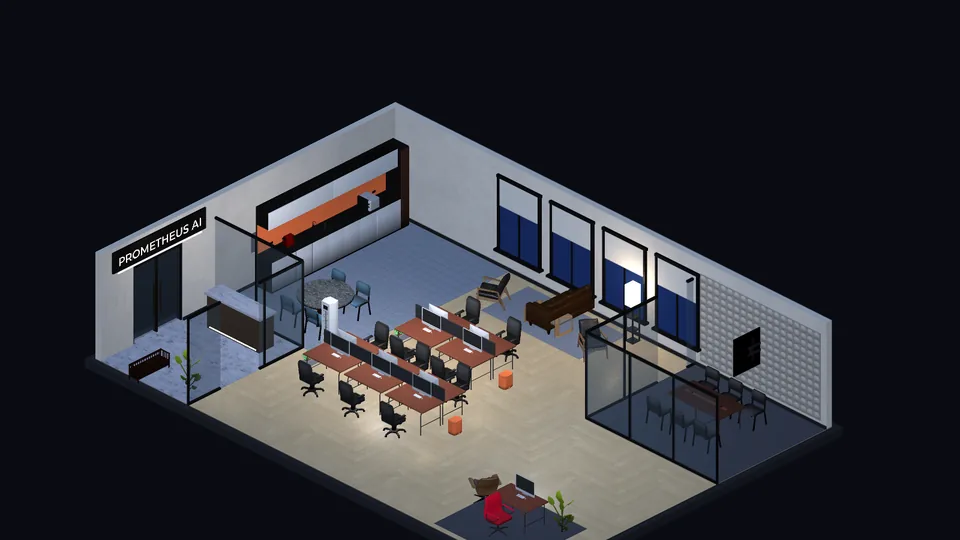
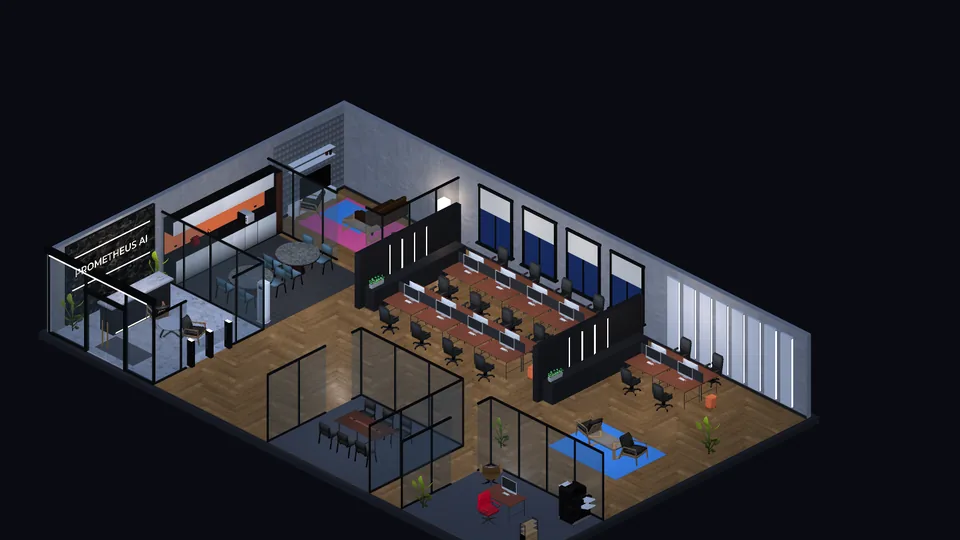
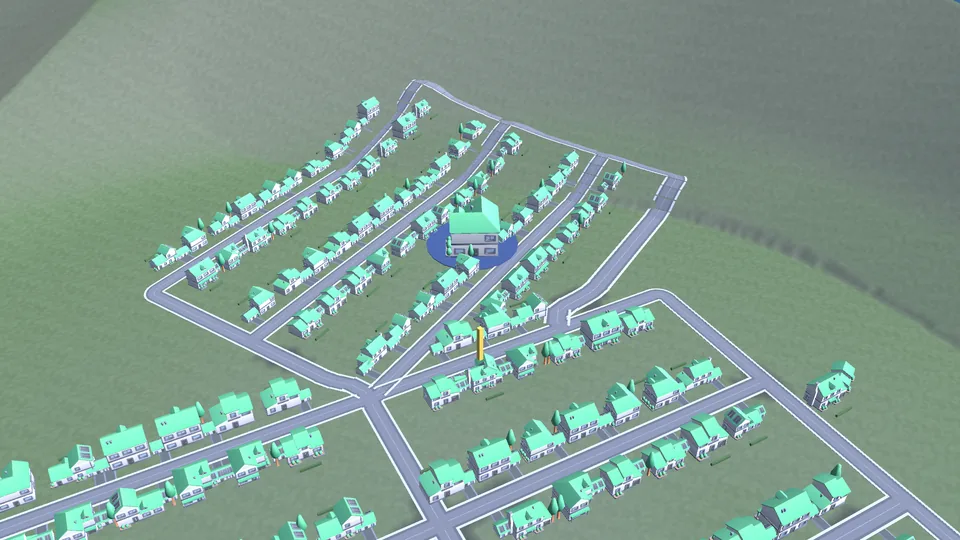
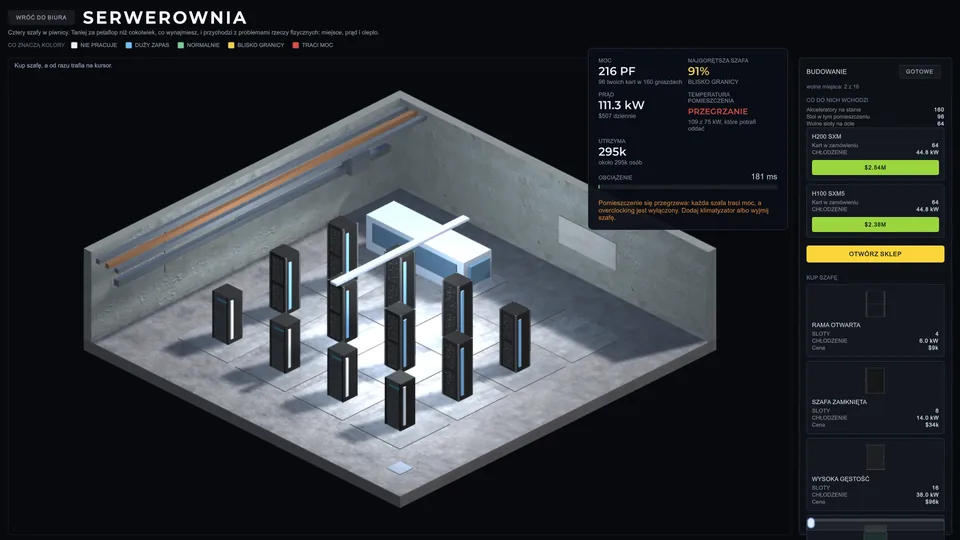


The first company view is deliberately modest: a desk, a bed, a living room, a garage and a cheap car. Growth is something you see, not only a number: bigger offices, people at desks and your own infrastructure, and one day somebody offers to buy the whole company.
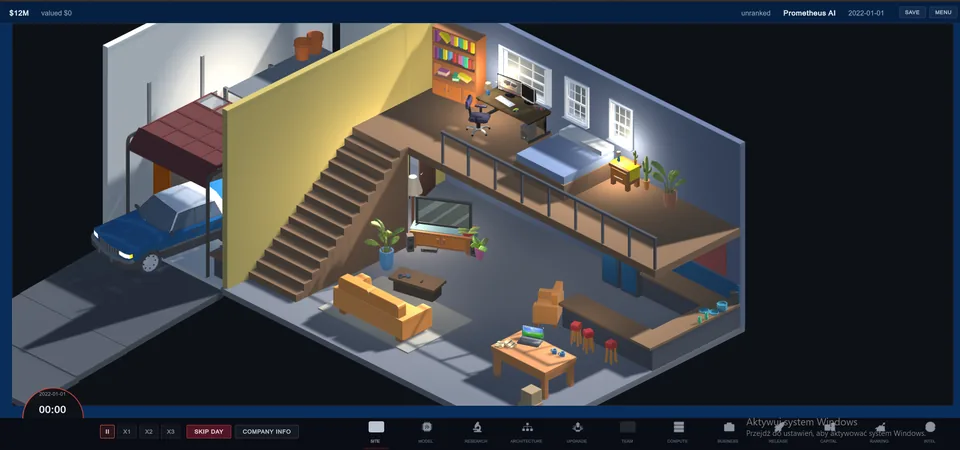
Every decision here costs money and time. A better model only helps if the company is still around on the day it is finished.
New architectures, data and model types unlock through research. Money helps, but some things you simply have to wait for.
Pick the size, the data and the compute. The creator shows how good the model will be, how long training takes and what you will pay.
A finished model can wait. Sometimes it is worth waiting out a rival's launch, but the market keeps moving meanwhile.
Set the price, the free plan and the advertising. A company that ships one model and stops growing falls behind.
The game is built on published AI scaling research and real hardware data. Where it has to guess the future, it says so.
A model trains best when it gets about twenty tokens of data for every parameter. Too little or too much data and the same budget buys a worse model.
Ten times the compute buys about ten points of quality. That is why your rivals keep pulling away, even when your last model was expensive.
Cards lose value with time, and again when a new generation arrives. Buy too early and your money is stuck in hardware the market has already passed.
Engineering notes and source are public in the Scaling Laws repository.
Version 0.5.0, released 20 September 2026, plays end to end, from the first day of January 2022 through a campaign that lasts years. It is an early version and some screens are still plain. Everything below is in the build you can download today.
MiNatix played Scaling Laws for hours, went through this site and PC Workman, and wrote down every place that was unclear or broke. Half the fixes on this page are hers. She is in the game's credits.
Yes. Every build so far is free for Windows on itch.io. A Steam release is planned for October to November 2026.

Version 0.5.0, released 20 September 2026, an alpha. The economy was rebuilt so that serving people pays for itself, the parts warehouse has an order window with express delivery, and the creator says how many people your own cluster can keep served.
Fourteen parody labs: OpenSI, Antropic, DeepThink, Infinity, Astral, DeepSearch, zAI, Swen, Grob, StableAI, IntroduceAI, Algho Alpha, Gohere, and E-Solutions, the invented lab of the player's cousin in Radom. Thirteen start where their real counterparts stood in 2022, and then each goes its own way.
Yes. You can buy shares and take over a lab with a majority, hire its staff, pay for smear stories at four levels, and sue it. Rivals can sue back. Every action changes the relationship.
Not yet. Alliances between labs and mergers are planned and not in any build.
It is source available, not open source. The code can be read on GitHub, but from 19 September 2026 it may not be redistributed. Earlier versions stay under PolyForm Noncommercial 1.0.0.
Marcin "HCK" Firmuga, a solo developer from Radom, Poland, publishing as HCK Labs. He also made PC Workman, a Windows monitor on the Microsoft Store.
Scaling Laws is being built openly by Marcin "HCK" Firmuga under HCK Labs. The source, engineering notes and development history stay visible while the game changes.